Quivering, trembling, shivering, shudder.
Do these quakes, come underneath the skin, straight like a jet through the soul, do they register a disturbance already past, or anticipate a disturbance yet to come? Reactions to a surprise (loss, death, joy), or preparations for one (fear, foreplay, anguish)?
You are crying, why are you crying? Where do the tears come from? (Sometimes, you name the circumstances, list the reasons. But how does circumstantial cause make its way into our body? Has a tear ever listened to reason? How is it that a cause out there is the cause closest to our body? Or does what’s out there only trigger something inside, something normally concealed, and so bring us closer to ourselves than we usually are?)
In tears, convulsions: tremors repeated, uncontrollably, in response to a cause we can’t locate, that disturbs from beneath. Impossible to know when the tears will end if ever. What they respond to is past, irrefutable. What they prepare for is next, uncertain. On both sides of trembling, there is blindness. All that we can know is we are touched. That whatever has touched us may go on touching us indefinitely, throwing us into blind repetitions until our eyes are hot and puffy.
A touch that comes in secret and operates in secret. (It was a movie scene or a breeze or a news report or a memory. It was a caress or a strike, a harsh word or a kind one. It was loss or potentiality. It was loneliness or love. Each time it touched it touched in secret. Furtive compulsions.)
Weeping with a secret. With a secret secret to us. Intimate as possible, more intimate than is possible: this cause closest to the body, invisible, “intangible.” It surprises us with our own intimacy. Drawing us out from the exterior, it sends us deeper.
And so we tremble, shake everywhere, as if our closest cause had come from elsewhere, possessed us, staggered us with our own uncanniness, drove us to sweat it out, let it out, scream it out, flee, to a point where identity shatters and a schizoid intensity escapes. As if our truest body was in this convulsion, releasing the pent-up, the long-in-coming, or charging up with urgency and consequence, the reasons for it unnecessary, exact source contingent, unset, unknown.
And other. Trembling: experience of our body being other. Becoming other in a quake of charged release and reload, pregnant with possible meaning but emptying itself of it, suspended in an abyss of initiative gone haywire, commanded by an insanity beyond reason. A secret drive to weep because of this, continually: pour out, give over. Cosmic communication in a vanishing point, nullified in absolution. The gift of the other’s touch coming: foreboding blessing, ecstatic rub…
***
Each time the gate breaks, exposed and vulnerable, the body gives way to quaking, the other has its chance to come.
Body as place of mourning for the closest cause.
Body as place of waiting for the secret touch.
Body as place of relay for the moving word.
Body as place of response for the other’s call.
Body as the other’s impossible place: DAWN.
Trembling, shot through with anxiety or pleasure, the body is the manifestation of the secret we are, which remains a secret to us but is exposed, manifest, visible to the other, as a secret.
Here it is in its clarity: obsession
With the other who sees in secret and makes us quake…
***
Derrida’s work relates “trembling” to an experience of being seen by an other we do not see. This being-seen happens invisibly, in secret. It is a “solicitation” in the sense of a total setting in motion, an all-encompassing appeal. For Derrida, there would be nothing like a “self” were it not for this solicitation coming from the other. A quote from Memoirs of the Blind:
“Now if tears come to the eyes, if they well up in them, and if they can also veil sight, perhaps they reveal, in the very course of this experience, in the coursing of water, an essence of the eye… Deep down, deep down inside, the eye would be destined not to see but to weep. For at the very moment they veil sight, tears would unveil what is proper to the eye… Contrary to what one believes one knows, the best point of view (and the point of view will have been our theme) is a source-point and a watering hole, a watering-point– which thus comes down to tears. The blindness that opens the eye is not the one that darkens vision. The revelatory or apocalyptic blindness, the blindness that reveals the very truth of the eyes, would be the gaze veiled by tears. It neither sees nor does not see: it is indifferent to its blurred vision. It implores: first of all in order to know from where these tears stream down and from whose eyes they come to well up. From where and from whom this mourning or these tears of joy? This essence of the eye, this eye water?”
***
Years ago, reading Emile Cioran, it hit me: “The only proof of constant communication would be endless tears.”
I remember wanting to die – that instant, later, for all eternity – of that intensity. To sink into it like an endless confession wandering into you in your pace. Perhaps I knew then that the only authenticity to be had was in this moment where identity was rended by a “communication” from the other that was impossible for me, an other that could only exceed, overwhelm, escape, that I “in fact” had had no experience of and couldn’t, but could only write to, promise to, love and think of. A friend coming, who might hear the full confession and quake in secret also, sent from me as from them to others, stranger as they inevitably would be, into the depths of another secret, trials of their own self-confession, their own terror’d dream.
Emile Cioran:
“Haven’t people learned yet that the time of superficial intellectual games is over, that agony is infinitely more important than syllogism, that a cry of despair is more revealing than the most subtle thought, and that tears always have deeper roots than smiles?”
“True confessions are written with tears only. But my tears would drown the world, as my inner fire would reduce it to ashes.”
“They ask you for facts, proofs, works, and all you can show them are transformed tears.”
“There is only one sign that indicates we have understood everything: tears without cause.”
***
The concept of the “shudder” [Schauer, erschauen] plays an essential role in Theodore Adorno’s aesthetic theory. The concept grabbed my attention last year when I became, for a moment, obsessed with “the chills.” (I’d read some passages from Derrida’s book “On Touching” at Morgenrot on Kastanienallee and had meandered, as slowly as possible, like a ghost or a soul departed, up through Mauer Park with the chill of death and infinite generosity coursing through every bone in my body: it was the other that had grabbed me and made me its, I was following its fragility, it was sending me to say its silence, to pray its grace into nearness.)
What is this mysterious tingling running up and down the spine? What are these springing hairs on the arms and the neck? What is this welling up from the belly to the eye, spilling out at its corners, air like purified wind, setting the whole body into a pause, overcoming the will? What is this delicacy, this grace, that can suddenly suffuse our whole reality, as far as the mind can dream? Why do they come at the strangest of times, sometimes so unexpectedly triggered, though the feeling itself be so familiar, as if recalling us to birth itself? I asked around and people gave me their incredible answers.
In the shudder we feel something primordial, touched by something distant but near. It may even be just that: an unheard-of proximity to other beings, an intimacy that transcends strict personhood. The shudder communicates an expanse of time that stretches infinitely both ways from now. There is wholeness there, whether as great detachment or dense connectivity. There is potential, felt tangibly, emanating from all that surrounds. Nature stands in just that moment for all eternity, dangerous and splendid. Perhaps even a call or a decision hits us precipitously. Perhaps the past finally makes sense. At times, the chills bring peace or gratitude, tied to a habit, a service, or a memory. Other times, it means panic, sixth sense for a loved one, telekinesis. Or it’s a kiss, a wordless whisper in the ear, a singular surprise contact. In each case, it delivers an experience of rarity, rare air, “real feeling.” Tearing, overwhelming, subtle, the shudder is like Being itself before Being, its indefinite preparation.
Of course, as an experience it is also ephemeral and passes fast. What we all fear– what could be more dreadful?– is that, once dissipated, it will never come back. That we’ll never tremble with premonitions of death or bouts of passion or intimate recollections ever again. That routine will set in and rot our susceptibility to quake. One could even argue that capitalism, the world of regimented adulthood and work, is organized to foreclose such weeping: this is masculinity and its entire vision of walls, accumulation, and power. It’s a crushing prospect: not just that we’ll be crushed by the numbness of our routine business, but that somehow we ourselves will become permanently closed off. That we will divorce ourselves from the secret that solicits us into being. That we’ll lose our body and what makes it one: the other’s coming.
Alas, the philosopher will say, by way of ironically reassuring those distressed: the shudder is an instance of “the impossible”! Meaning: no amount of intention, will, or adventure will make us quake automatically. The only remedy for closure, perhaps, is chance. Or art. Or honesty. Or thinking. Or changed habits. Or vulnerable engagements. Or novel riskings. Or love. Sure, preparations can be made, the heart can be trained, and these in a sense are already breakthroughs. But when the other comes, if it comes, it comes otherwise by definition. We never tickle ourselves into laughing fits. Even if all the motions were exactly the same, only the other could do that. The shudder is not in the realm of the “I can,” of plans and programs. It is a desire-disturber, a desire-suspender, a desire-annihilator. Even so, it is the magnificence of desire adored.
(And if by some process of auto-affection we chill ourselves, slip into a creative groove where the other seems to dictate all our moves from afar, this only shows that the body is the place of a constant encounter, even when alone; and that our psyche is already divvied up and dispatched, in all its contours, on a surface it knows nothing of, such that nothing, not even once, is to be called “its own.” Every touch contacts, and loses, the inappropriable. Thought begins with the other’s weight against it. Its recalled passage through Being is called experience.)
Quaking, shivering, weeping, shuddering: it all comes to us from the other, before and after we are us. It happens in secret and communicates a secret to us. It is our secret, our closest cause, secret to us. Spark of confession, impetus for all these stolen remarks. A gift recognizance mission, set on reembark. The other, as precedent, is immemorial, as surviving, is coming. Its indetermination is our heart-warmer. If it ever was, it was unforeseeable, unknowable, unliveable. It passed through and left a trace for the other: the other other, of course, perhaps you, but hopefully it’s clear: the other is never, not once, the same. Nor are you. This time everything was different. No matter how late or how early, what trembles is a place apart, senseless and obtuse. We are pulled apart there, like destiny. Our obsession, then, in love, in surrender: that the shudder never settle; that the other be the one to seal the ring.
Theodore Adorno:
“Ultimately, aesthetic comportment would be defined as the capacity to shudder, as if goose bumps were the first aesthetic image. What is later called subjectivity, freeing itself from the blind anxiety of the shudder, is at the same time the shudder’s own development; life in the subject is nothing but what shudders, the reaction to the total spell that transcends the spell. Consciousness without shudder is reified consciousness. That shudder, in which subjectivity stirs without yet being, is however being-touched-by-the-other. Aesthetic comportment assimilates itself to that other rather than subordinating it. Such a constitutive relation of the subject to objectivity in aesthetic comportment joins love and knowledge.”
“Am Ende wäre das ästhetische Verhalten zu definieren als die Fähigkeit, irgend zu erschauern, so als wäre die Gänsehaut das erste ästhetische Bild. Was später Subjektivität heißt, sich befreiend von der blinden Angst des Schauers, ist zugleich dessen eigene Entfaltung; nichts ist Leben am Subjekt, als daß es erschauert, Reaktion auf den totalen Bann, die ihn transzendiert. Bewußtsein ohne Schauer ist das verdinglichte. Jener, darin Subjektivität sich regt, ohne schon zu sein, ist aber das vom Anderen Angerührtsein. Jenem bildet die ästhetische Verhaltensweise sich an, anstatt es sich untertan zu machen. Solche konstitutive Beziehung des Subjekts auf Objektivität in der ästhetischen Verhaltensweise vermählt Eros und Erkenntnis.”
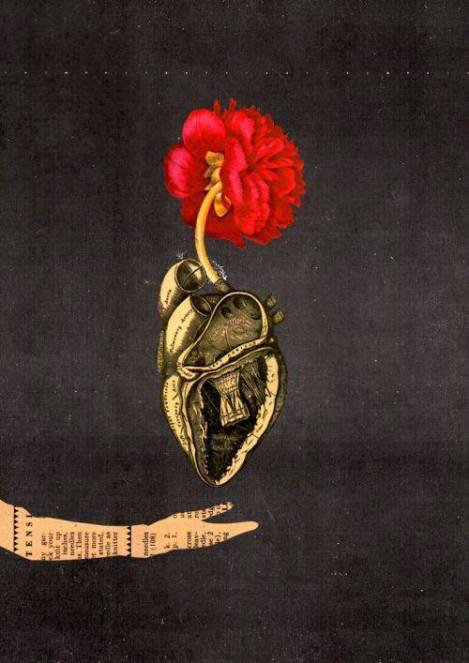
Victoria Ulrike, Obsession
[from April 11, 2016; text in progress]
 fragilekeys